“If you can’t feed a hundred people, then just feed one”
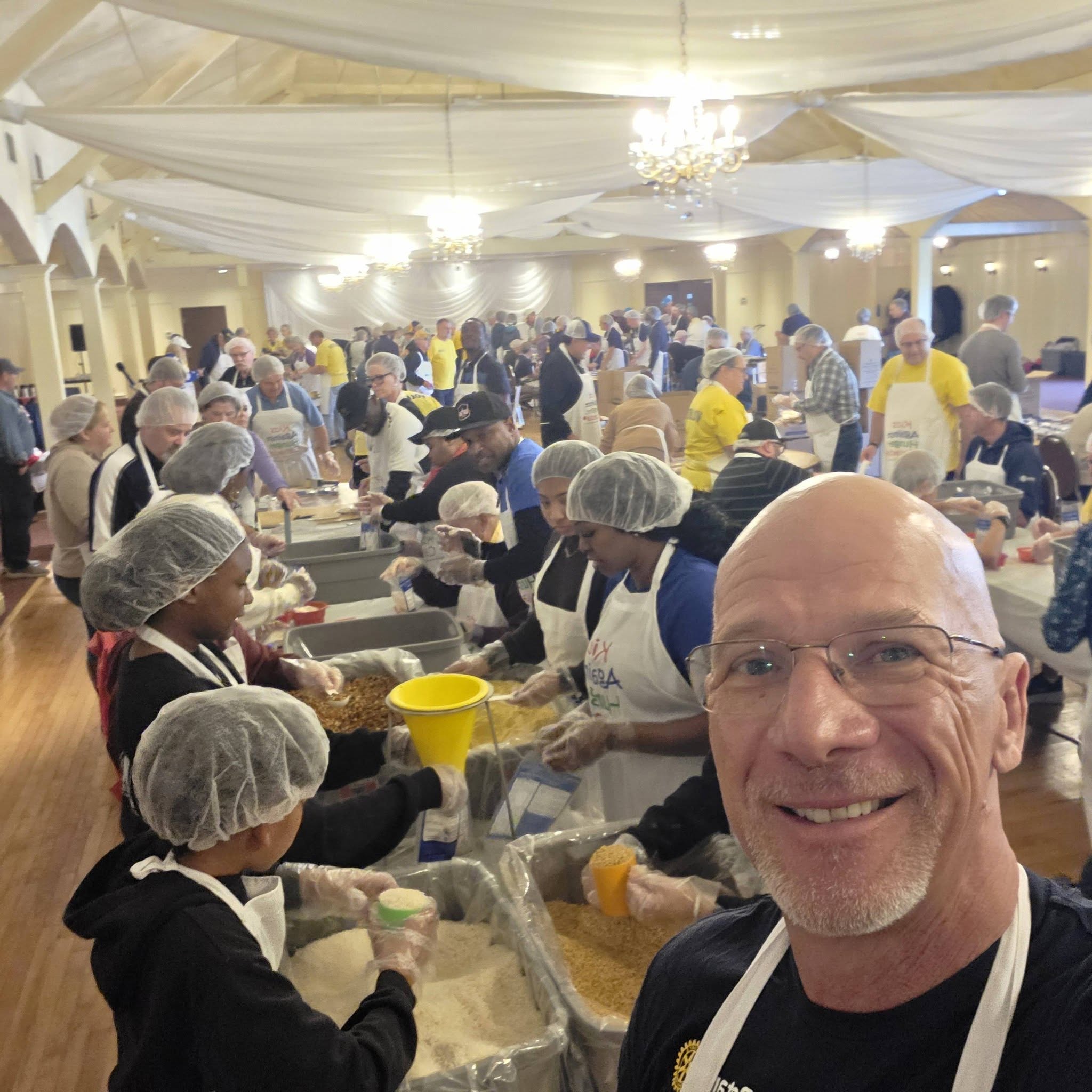

Forty thousand meals were packaged in Oshawa in a single day. Some will travel thousands of kilometres to reach families facing hunger, while others will support people closer to home. Behind this collective effort lies a difficult reality: even in communities experiencing economic growth, access to adequate food remains beyond the reach of many households.
On November 1, members of the Rotary Club of Oshawa, Rotary Club of Oshawa-Parkwood and fellow Rotary clubs across Durham Region gathered at Oshawa’s Jubilee Pavilion for a food-packaging initiative facilitated by Kids Against Hunger Canada. Together, volunteers packaged 40,000 meals intended for communities in Haiti, Cuba, parts of Africa and Oshawa.
Among those who rolled up their sleeves were Mayor-Elect Tito-Dante Marimpietri, Members of Parliament Rhonda Kirkland and Jamil Jivani, Regional and City Councillor Bob Chapman, other City Councillors, and community leaders Omar Wisdom and Martin Franssen.
Their participation showed how service can unite people across political, professional and cultural backgrounds, particularly when communities face shared challenges.
During the event, Rotary Club of Oshawa President Mark Morissette presented a cheque on behalf of the club’s entire membership to Wayne McConnachie, General Manager of Kids Against Hunger Canada, and Angela Lloyd, the organization’s Logistics and Operations Lead.
The initiative reflects more than a one-day achievement. Since Rotary District 7070 began participating in the food-packaging program over two decades ago, volunteers have packaged more than one million meals.
Kids Against Hunger Canada helps turn such collective goodwill into practical humanitarian assistance. Through partnerships with volunteers, businesses, schools and service organizations, it coordinates the packaging of nutritious meals containing rice, vegetable protein, dehydrated vegetables and essential vitamins and minerals for communities in Canada and abroad.
Yet this effort comes at a time when food security faces growing economic pressures.
Durham Region Public Health reports that 29 per cent of households experienced food insecurity in 2026, while a basic nutritious diet for a family of four cost approximately $1,326 monthly. Nationally, University of Toronto’s PROOF research estimates that 9.8 million Canadians, including 2.4 million children, lived in food-insecure households in 2025.
Trump trade wars still drive hunger


Meanwhile, renewed Canada–U.S. trade tensions under President Donald Trump’s administration have introduced further uncertainty for Canadian businesses and households. Tariffs, retaliatory measures and disrupted trade negotiations have raised concerns about production costs, employment and consumer prices.
Farm Credit Canada’s September 2026 assessment identified growing pressure on food manufacturers from trade restrictions, freight costs and volatile input prices. The Parliamentary Budget Officer has also warned that prolonged trade measures could weaken Canadian economic growth and employment.
For an economy such as Durham’s, with connections to manufacturing, logistics and cross-border trade, these developments raise questions about household financial resilience. While tariffs are not the sole cause of food insecurity, economic uncertainty can make already vulnerable families more exposed to rising costs and unstable employment.
Food insecurity is therefore not simply a humanitarian concern. It is an economic development issue.
When households spend more of their income on food and housing, less remains for education, transportation and local businesses. For newcomers, settlement costs and barriers to employment matching their qualifications can further limit household purchasing power and the region’s economic potential.
Charitable initiatives provide essential relief, but lasting solutions require adequate incomes, affordable housing, secure employment and accessible community services.
Durham Region’s $750,000 investment in food-security and poverty-related initiatives in 2025 demonstrates the importance of combining immediate assistance with longer-term strategies.
Businesses can contribute through fair employment, youth mentorship and newcomer integration. Municipalities can strengthen partnerships, while organizations such as Kids Against Hunger Canada and Rotary demonstrate how community participation can mobilize resources across borders.
The volunteers have completed their work, and thousands of meals are destined for families in need. But the question Oshawa must continue asking is not how many meals can be packaged at the next event. It is what businesses, governments and communities can do together to ensure fewer families need them.