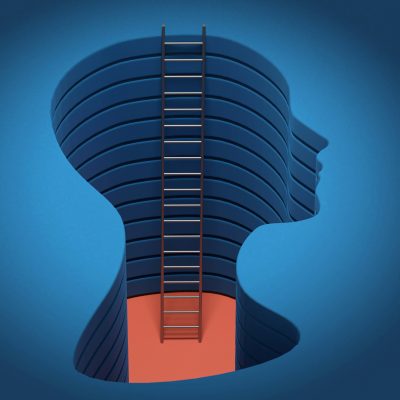
The brain quits before the body does


He’s the world’s fastest 50-mile runner for his age group.
Nicholas Thompson, CEO of The Atlantic and an accomplished distance runner, has distilled profound life lessons from his thousands of miles on the road, chronicled in his book, The Running Ground: A Father, a Son, and the Simplest of Sports. Far from just a memoir about speed and sweat, Thompson’s journey illustrates how the sheer act of putting one foot in front of the other can illuminate our most complex struggles.
Here are 10 key life lessons you can learn from the simple act and art running.
-
Discipline Creates Freedom
It seems counterintuitive, but Thompson’s experience shows that the discipline required to train for marathons and ultramarathons—the early mornings, the restrictive diet, the non-negotiable eight hours of sleep—is what leads to peak performance, or a kind of “flow state.” In life, mastering the fundamentals and establishing routines gives you the freedom to excel creatively and emotionally.
-
Age is a Strategy, Not a Sentence
Thompson found that by incorporating smarter training, focusing on neglected metrics, and prioritizing recovery, he was able to run his fastest marathons in his forties. The lesson? We often accept limits based on conventional wisdom. Conscious effort and better strategy can unlock potential and defy the perceived decline of aging.
-
The Compounding Power of Consistency
While intense training is vital, the core of distance running success is consistency. Showing up day after day, week after week, is what builds endurance. Similarly, in life, consistent effort on a project or goal—even small, daily steps—will always beat sporadic, all-out bursts of effort.
-
You Can Go Faster Than You Think
Thompson recalls a race where he set a personal record because he didn’t realize how fast he was actually running. Our minds create limits for us out of fear of failure, not always because our bodies have actually reached their breaking point. Pushing past the mental block is often the biggest hurdle to a breakthrough.
-
Discomfort is the Currency of Change


Nick Thompson
To improve at running, you have to push yourself to speeds and distances that feel too fast or too far. Growth happens in that space of discomfort. Whether it’s a new career challenge or a difficult conversation, success often lies just beyond the point where you feel like slowing down or stopping.
-
Pain is a Signal, Not a Stop Sign
The feeling of accomplishment at a finish line is directly proportional to the pain and effort invested in the training and the race. This applies to any long-term endeavor: the greatest rewards in life—a successful business, a thriving relationship, a mastery of a skill—are reserved for those who are willing to endure the most challenging periods.
-
Running Is a Form of Moving Meditation
The simplicity of running—feet, pavement, breath—can strip away the noise and chaos of a busy life. For Thompson, running provided the mental space to reflect on profound themes like fatherhood, ambition, and aging. It’s a space where you can outrun your shadows and work through complex emotional terrain.
-
Success is a Complex Metric
Running fast is one type of success, but it’s not the only one. Thompson’s memoir shows the importance of balancing the performance (the race time) with the meaning (the connection with his father, the personal growth). True success in life requires a holistic view, valuing personal connection and introspection as much as professional achievement.
-
Your Story is Written in Steps, Not Leaps


An ultramarathon is not finished in one glorious sprint; it’s completed by hundreds of thousands of individual steps. Similarly, life is a collection of days, decisions, and small efforts. You don’t achieve greatness in a single leap, but through the quiet grace of moving ever forward—one step at a time.
Thompson’s powerful memoir ultimately serves as a reminder that the simplest of human actions can unlock the greatest potential within us. It’s a beautiful testament to how physical endurance shapes mental and emotional fortitude.
Read More: